Vows at Four, Chaos at Eight: The Timeline Maths of a Late-Afternoon Ceremony
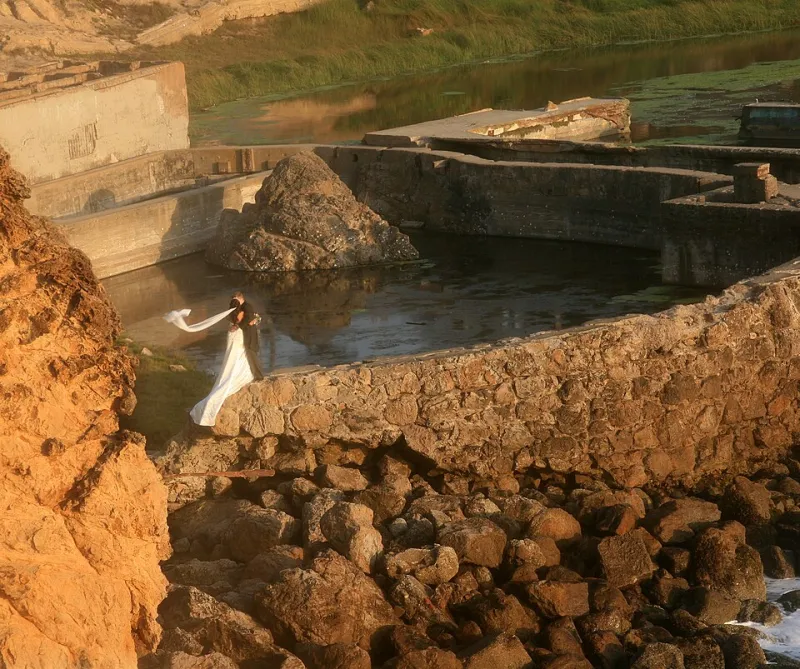
Photo: Brocken Inaglory, CC BY-SA 3.0, via Wikimedia Commons
Every January I get the same email. It reads something like: 'We've got the barn from 1pm until midnight, so we're thinking a 4pm ceremony — it feels a bit more romantic, doesn't it?'
It does. It also quietly rewrites the next eight hours of your day, and occasionally your final invoice. A four o'clock ceremony is not just a ceremony time. It's a decision about when dinner happens, when the speeches happen, whether your photographer gets golden light or a phone torch, and how much of your budget disappears into overtime.
Here's what I've watched happen, in real timelines, and what I'd do differently.
The domino effect, hour by hour
Take a real wedding from last October — a converted mill in Cheshire, 96 guests, music off at midnight. The plan looked sensible on paper: 4pm ceremony, drinks until six, sit down at 6.15, speeches after the meal, first dance at nine.
What actually happened was this. Guests started arriving at 3.15 because the invitation said ceremony at four and nobody wants to be late; the ceremony room wasn't dressed until half three, so forty people stood in the car park admiring each other's coats. Vows finished at 4.35. Confetti, hugs and a receiving line nobody had scheduled ate twenty minutes of the drinks reception. The canapés — six pieces a head, ordered on the assumption of a 6.15 dinner — were gone by 5.40. By quarter past six there were people hovering near the kitchen door like gulls.
Dinner was called at 6.30. Starter at 6.50, main at 7.35, and the speeches began at 8.40, which is precisely when the thirty evening guests arrived, so the best man delivered his material to a room that was half listening and half queueing at the bar. First dance at 9.20. The band played two sets instead of three. The couple's portraits, which they'd been genuinely excited about, happened at 6.40 in a car park with a hedge in the background.
Nobody did anything wrong. The time slot did it.
Where the money quietly leaks
Late ceremonies rarely blow a budget with one big number. They leak.
- Canapés get upgraded. Six pieces per head is fine when dinner lands at 5.45. At 6.30 it is not. Substantial canapés in 2026 quotes tend to run £5–£8 per person more, so on 96 guests that's easily £500 before you've added a single glass of fizz.
- Photography cover stretches. A 4pm ceremony is an eight-hour day at minimum once you've factored in morning preparations. Couples who want first-dance pictures and a few night-time portraits end up adding an hour at £150–£250.
- The band runs late. Load-in has to work around the meal, and a band booked for a 7.30 set that goes on at 9 often means an overtime charge of £150–£300 when their contracted finish moves.
- Venue hours get pushed. If your licence allows music until midnight, the last hour is the expensive one, and extension fees of £200–£500 an hour are not unusual on top. Some venues also charge staff overtime after 11pm across the whole team.
- The evening food gets squeezed. Hot food at 9.30 becomes 10.15, and suddenly you're paying for bacon rolls nobody can face because they're still full from a 7.35 main.
Add even three of those together and you've spent £900–£1,200 on the fact that the ceremony started at four.
Winter makes it worse
In summer, a 4pm ceremony is workable because you have four or five hours of decent light afterwards and the sunset does you a favour. In November or December it's a different sport entirely. Sunset on 8 November 2026 in Manchester is around 4.30pm. Your ceremony is finishing as the light goes.
That means all your group photographs are flash-on, the confetti shot is a flash shot, and your couple portraits have to happen in the dark or not at all. Plenty of photographers will happily do dramatic flash work in a courtyard, and it can look brilliant — but it's a choice, not a surprise, and it should be planned and priced for.
A winter wedding with a 4pm ceremony also means guests arriving in darkness and leaving in darkness, with the whole day compressed into a four-hour window where one room has to do everything: ceremony, drinks, dinner, dancing. Venues with a midnight curfew usually want the meal cleared by ten.
Three fixes that actually work
Move the ceremony, keep the romance. A 2pm ceremony with a long, generous drinks reception and lawn games or a live acoustic set gives you light for photographs, a comfortable gap before dinner and speeches at a civilised 7.15. It is far easier to fill two extra hours of daylight than to compress four hours of evening.
Go early with the photos. If the venue only has a 4pm slot, ask your photographer about a first look — a private, pre-ceremony reveal at 2pm. You get portraits in good light, you settle your nerves, and you walk into the ceremony already having had the moment. Many 2026 photographers quote this as standard rather than an extra.
Feed earlier, then feed again. If you're locked into 4pm, serve genuinely substantial canapés from 4.45 — bowls, not just bites — bring dinner forward to 6pm if the kitchen will allow it, and put the speeches before the meal rather than after. Speaking before dinner is sober, warm and about twelve minutes quicker. Then serve the evening food at 9 rather than 10, so the dancing actually starts.
For winter weddings I'd take the 1.30pm ceremony nearly every time. If the venue only offers late afternoon, plan for candlelight from the start: extra lighting, a clear indoor portrait spot and a photographer who does flash work properly.
The one question to ask before you sign
Not 'when can we have the ceremony?' Ask instead: if we start at four, what time does the room need to be turned around, and what does overtime cost across every supplier? Then count the dominoes before you agree.
A late ceremony can absolutely work. I've seen it be lovely. But it works when somebody has done the maths in advance, not when it's discovered on the night by a hungry room and a band wondering why they're still loading out at half eleven.