Five Wedding Websites, One Spreadsheet: What Guests Actually Clicked — and the £400 of Add-Ons Nobody Touched

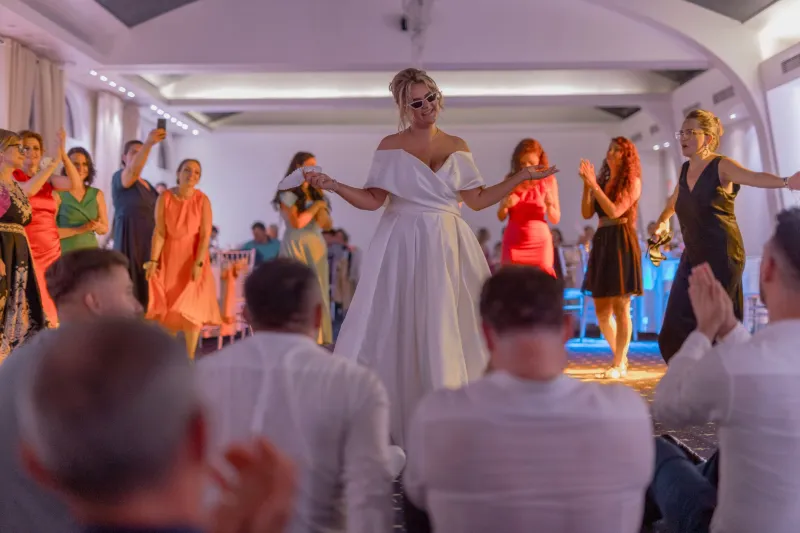
Photo: Claudio Centonze / European Commission Audiovisual Service, CC BY 4.0, via Wikimedia Commons
I spent three weeks this autumn with read-only access to five couples' wedding websites, plus their RSVP exports, plus their bank statements (willingly handed over, I promise). They were a decent spread: a big marquee wedding in Somerset, a register office do in Leeds, a village hall in Fife, a hotel in the Cotswolds and one very small garden wedding in Kent.
The point wasn't to rank the platforms. It was to answer one question: what did guests actually use, and what did the couple pay for that nobody touched?
How I did the audit
I scored each site on three things: whether a guest had to email the couple to ask something the site could have answered, how many guests completed the RSVP without a reminder, and what each feature cost in money or faff. Names are changed below, because one of these couples is still being teased about the countdown.
What guests used, every single time
The date, the postcode and the times. Every couple put a simple 'the day at a glance' block near the top, and every couple's traffic data showed it was the most-viewed page after the homepage. On the Kent wedding, 88 of 91 guests looked at it at least once. That's the entire job, really.
An RSVP deadline in the heading. The Somerset site said 'Please reply by 1 August' in bold directly under the form, and repeated it in the reminder email. They had 94 per cent of responses four days before the deadline. The Leeds couple buried theirs in a dropdown and were still chasing cousins in September.
A dietary and allergy field. This was the single most-used interactive feature across all five weddings. But see the privacy note below, because it's also the one most often handled carelessly.
Getting-home information. Last train times, taxi numbers, whether the car park allowed overnight stays. Un-glamorous, and it saves you forty text messages at 11pm. The Cotswolds couple added a note about a £12 taxi surcharge after midnight and three separate guests mentioned it in thank-you cards.
The FAQ, if it was short. Plus-ones, children, dress code, confetti, whether the bar was card-only. Four or five honest questions. The Fife couple wrote eleven and nobody read past six.
Gift information, done quietly. One line and a link. Anything more elaborate made people awkward.
What nobody touched
This is the £400 end of the article.
The animated countdown. £49 as a premium add-on, and the analytics showed a median of two views per guest — most of them the couple themselves. It also looked dated within about a week. If you want a countdown, your phone already has one.
The password-protected gallery. £96 for the year's premium tier, plus an hour of the groom's evening setting it up. Eleven of 140 guests logged in. Unless there are genuine safeguarding reasons for protecting images — and sometimes there are — a shared link that expires is kinder and cheaper.
The song request voting widget. Twenty requests, fourteen of which came from the same four people, and one of whom submitted the same song nine times. Lovely in theory.
The interactive table finder. £120 of custom build. Guests used the printed board by the door, because guests arrive in a hurry and paper works. For a big wedding, printed boards plus a line on the site is plenty.
The live hashtag wall and instant-print guest book. £350–£450 depending on supplier, and the printouts went home in a carrier bag. A shared photo album link in the group chat did the same job for nothing, with more photos and fewer captions about the printer jamming.
The monogram animation on the homepage. £60. It was nice. Nobody mentioned it. Ever.
Stack the countdown, the gallery tier, the table finder and the monogram and you land at roughly £325, plus £75 of printed QR cards pointing to a site most guests had already bookmarked. Call it £400.
The GDPR bit nobody reads
Wedding websites hold real personal data: names, contact details, dietary requirements, accessibility needs, sometimes home addresses for minibus pickups. Under UK GDPR that's your responsibility as the data controller, even when a platform is doing the storing.
A few practical rules I'd apply to every wedding site in 2026:
- Don't publish a guest list. People book time off work for weddings. A public list of who's attending is a privacy problem and occasionally a family problem.
- Collect the minimum. A dietary field asking 'any allergies or requirements?' is fine. A field asking for medical detail is not.
- Lock the admin down. One shared login for the couple, changed after the wedding, and never a spreadsheet of guest details emailed round the wedding party.
- Check where the data lives. Ask the platform where it stores data and whether it's transferred outside the UK. Most reputable ones will tell you in a support article.
- Delete afterwards. Export the RSVPs for your own records, then delete the guest data 30–60 days after the wedding. Two of my five couples had sites still live and still collecting data nine months later.
And one thing that isn't GDPR at all but matters just as much: make sure the site works properly on a phone, with readable text, without anyone having to sit through an animation first.
What I'd do with the £400
Put a printed details card in with the invitation, with a QR code and the RSVP deadline on it. Send one reminder message a week before the deadline. Put £100 towards a coach or minibus so nobody's driving. Spend the rest on a sensible domain and a year of a simple platform, and keep the change for the thing that actually gets remembered — which, across all five of these weddings, was the food and the band, in that order.
Communication clarity beats decoration. It nearly always does.