The Favour Table Post-Mortem: What Survives the Coach Home
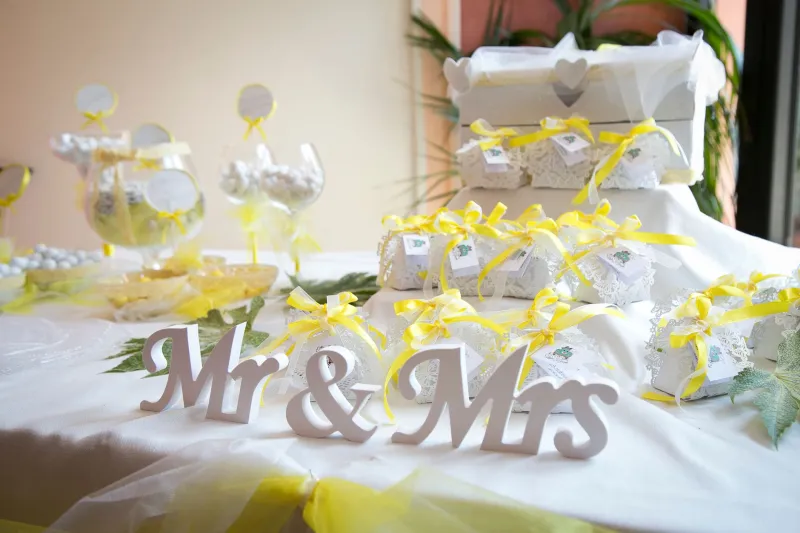
There’s a moment near the end of every wedding where the band is packing up, the coach driver is hovering, and the venue staff are circling with bin bags. That’s when you see the favour table clearly. Not as it looked in the styling photos, but as it actually is: a graveyard of personalised seed packets, tiny gin bottles, and ribbon-tied boxes that people have politely ignored for six hours.
I’m not anti-favour. I’m anti-favour that nobody wants. And after enough UK weddings, I’ve got a fairly unsentimental view of what guests actually take home.
The 11pm table audit
Walk around a reception at the end of the night and you can sort favours into three piles: taken, half-taken, and abandoned. The taken pile is smaller than couples expect. The abandoned pile is bigger. And the half-taken pile is usually a mess of torn packaging and one leftover sweet.
This isn’t because your guests are rude. It’s because they’re tired, they’ve got a coat and a clutch bag and possibly a slice of cake, and your favour is competing with a taxi that’s already outside. If it doesn’t pass the “would I pick this up if it wasn’t free?” test, it stays on the table.
The cost-per-guest maths
Let’s do the boring bit, because it changes the conversation. Say you’ve got 90 guests and you spend £3 per favour. That’s £270 before you’ve paid for personalisation, ribbons, boxes, delivery, or the time you spent tying tiny tags at midnight. At £4 a head, you’re at £360. At £5, you’re at £450.
That’s not a small line item. For the same money you could upgrade the welcome drink, add a proper late-night snack, or put a decent bottle of wine on each table. Those things get used. A personalised wooden coaster usually doesn’t.
I’m not saying every favour is a waste. I’m saying the cost-per-guest maths deserves the same scrutiny as the venue deposit. In 2026, with so many couples trying to keep costs honest, “we’ve always done favours” isn’t a good enough reason to spend £400 on something that ends up in a bin bag.
What guests actually pocket
In my experience, the things that get taken are the things that are either genuinely useful or genuinely nice to eat. Mini gin bottles often go, though not universally. Good chocolate goes. Fudge from a local shop goes. A decent bag of sweets goes, especially if people can share it on the coach. Practical items go if they solve a problem — a pair of cheap flip-flops for dancing, a blanket if the venue is cold, a hangover kit if you’re feeling generous.
Charity pin badges are a mixed bag. Some guests love them. Others quietly leave them because they don’t want to wear a badge, and they feel awkward about putting a charity favour in the bin. That’s not a reason to avoid charity donations, but it is a reason to make the donation the favour rather than attaching a trinket to it.
What gets left behind
Personalised seed packets are the classic. They look lovely in photos and then sit on the table because nobody wants to carry a paper packet home and plant it in November. Personalised pens, keyrings, and bottle openers are usually left unless they’re genuinely good quality. Tiny succulents are heavy, messy, and often abandoned because guests don’t want to carry soil in their bag. Matchboxes get taken by smokers and left by everyone else. Anything with your names printed on it has a very short life outside the wedding.
The pattern is simple: if it’s decorative, fragile, or requires effort to use later, it’s at risk. If it’s edible, useful, or easily shared, it has a chance.
Five alternatives that earn their place
-
One edible favour per couple, not per guest. A box of local fudge or a couple of good chocolates between two people is enough. It costs less, looks generous, and doesn’t leave 90 tiny boxes behind. Add a small card with the maker’s name if you want the sentimental touch.
-
A donation with a clear sign. Put a framed note by the card table saying you’ve donated to a local charity instead of favours. No pin badge, no trinket, no guilt. If you want guests to take something, offer a single postcard with the charity’s details.
-
A morning-after breakfast bag. Hand these out at the exit rather than leaving them on tables: a pastry, a piece of fruit, a carton of juice. It solves a real problem, gets taken, and doesn’t clutter the reception. It’s not a traditional favour, but it’s memorable.
-
One useful thing that solves a wedding problem. A basket of cheap flip-flops for the dance floor, a few blankets for an outdoor venue, or a bowl of sunscreen for a summer marquee. These get used on the day, which is the point. If they’re left, they’re left because they weren’t needed, not because they were pointless.
-
A centrepiece raffle. Instead of one favour per guest, use the table centres as the take-home gift. Number each centrepiece, draw a few tickets, and let people claim a plant or arrangement if they want it. It’s one item per table rather than ninety, and it goes to someone who actually wants it.
A simple decision framework
Before you order anything, ask three questions. First: would I take this home if I’d paid for it? Second: does it work without a label explaining it? Third: can it be eaten, used, or passed on within 48 hours? If the answer to any of those is no, think twice.
Then set a hard cap. Decide your favour budget per guest and stick to it. If the maths pushes you over, cut the favour rather than the thing guests actually notice — the food, the drink, the music, or the seating plan. Nobody has ever left a wedding saying the night was ruined because there wasn’t a personalised seed packet.
The best favours aren’t the most Instagrammable. They’re the ones that make it home, get used, and don’t leave the venue staff with a bin bag full of good intentions.